Nikkei 225 Index slips as Kioxia stock suffers a harsh reversal
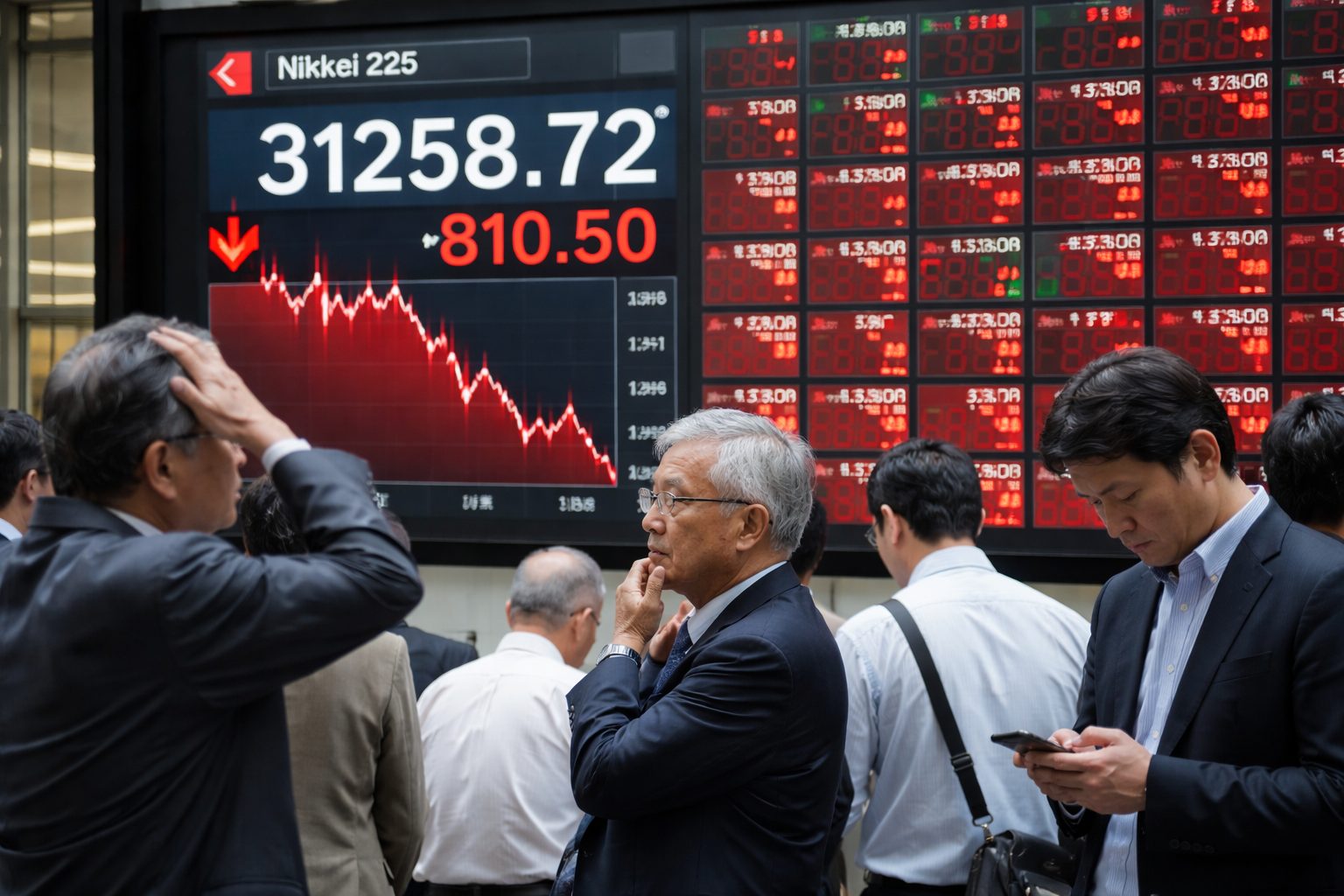
The Nikkei 225 Index has slumped over the past two consecutive days, reaching a low of 68,863 as fears of a technology bubble intensify. It has slipped by 5.5% from its high this week, with key technology companies in the red.
Kioxia stock nears a bear market
The Nikkei 225 Index has dropped sharply in the past few days, driven by the ongoing retreat of top AI stocks. Kioxia’s stock price has plunged by 18% from its highest point this year, and is now hovering at its lowest level since June 17.
Kioxia, a top player in the memory industry, has slumped, mirroring the performance of its competitors. In the United States, Micron stock plunged by 12% on Tuesday as investors positioned themselves for the upcoming earnings.
The same trend is happening in South Korea, where top companies like Samsung and SK Hynix have slumped. SK Hynix, which briefly became the biggest company in the country, has started to shift some of its production from the high-end HBM chips to the consumer-focused ones. That could be a sign that demand is waning.
Other companies exposed to the AI industry have also retreated sharply this week. Masayoshi Son’s Softbank stock has dropped by 30% from its highest point this year. Softbank has made some major AI investments, including companies like OpenAI and Graphcore.
Tokyo Electron, which makes equipment used in the chip manufacturing industry, has slumped by 13% from its highest point this month. Other top companies in the industry, like Advantest, Keyence, Renesas Electronics, and Fujitsu have all pulled back sharply.
Potential BoJ rate hikes to boost the yen
The other reason behind the ongoing Nikkei 225 Index sell-off is that the Japanese yen continues its strong downward trend. The USD/JPY pair jumped to 161.55 today, and is hovering near its highest level in over 40 years.
Therefore, with the pair being above the key support of 160, investors are concerned that the BoJ will hike interest rates more to make the yen more attractive.
These fears are notable because the bank has fewer options to boost the Japanese yen. It has already pumped $73 billion to the market and hiked rates to a multi-decade high of 1%.
Still, despite this, the spread between the US and Japanese bonds is substantial, a widening that may continue if the Fed hikes rates later this year. Worse, it is highly unlikely that the US will come to Japan’s rescue using currency swaps before the upcoming midterm elections.
These fears explain why Japan bond yields are rising gradually. The ten-year yield rose to 2.67%, while the two-year yield rose to 1.41%.
Nikkei 225 Index technical analysis
Ni225 | Source: TradingView
The daily chart shows that the Nikkei 225 Index has pulled back in the past few days. It has slipped from a high of 72,781 on Monday to the current 68,572. This retreat has coincided with that of US indices like the S&P 500 and Nasdaq 100 indices.
Because of the recent rally, the index has remained above the 50-day and other moving averages. The two lines of the Percentage Price Oscillator (PPO) have formed a horizontal channel.
Therefore, the index will likely remain under pressure in the near term as investors start booking profits. If this happens, the next level to watch will be the psychological level of 68,800.
The post Nikkei 225 Index slips as Kioxia stock suffers a harsh reversal appeared first on Invezz